




AI vs Dermatologists: Who Detects Melanoma Better? 2025 Evidence Review
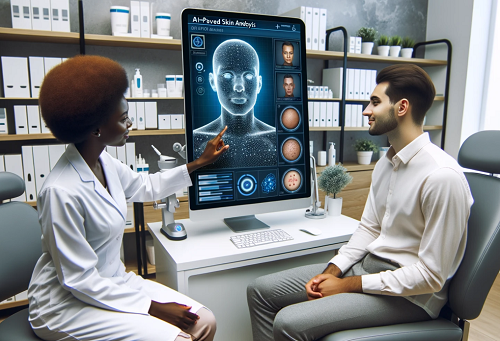
Melanoma is one of the fastest-rising skin cancers globally — but also one of the most treatable when caught early. In the last decade, a new question has emerged in dermatology: Can artificial intelligence (AI) detect melanoma as accurately as a dermatologist?
With millions of skin images now used to train powerful deep-learning systems, AI has become a serious diagnostic tool. Some studies even claim AI outperforms humans.
But is AI truly better? Or is the dermatologist still the gold standard?
This article breaks down the latest 2024–2025 data, how AI compares to dermatologists, and what patients and clinics should know.
Why Melanoma Detection Matters More Than Ever
Melanoma makes up only 1% of skin cancers but causes over 75% of skin-cancer-related deaths worldwide. Early detection increases survival rates dramatically — in stage 0 or stage 1, survival can reach over 95%.
But early melanoma is tricky to spot. That’s why both dermatologists and AI tools focus on:
Identifying suspicious moles early
Improving triage efficiency
Reducing missed early melanomas
The rise of AI skin scanners and smartphone apps has made melanoma detection accessible — but also raised questions about accuracy and reliability.
AI vs Dermatologists: What the Latest Research Shows
1. AI Performs at Dermatologist Level on Image Tests
Multiple studies in the last two years show that AI can match — and sometimes exceed — dermatologist accuracy when classifying dermoscopic images.
Key reasons:
AI can analyze millions of images, far more than any clinician sees in a lifetime.
Deep neural networks learn subtle patterns invisible to the human eye.
Newer models (like the 2025 PanDerm foundation model) are trained across multiple imaging modalities, improving generalization.
In benchmark tests:
AI sensitivity often ranges from 80–95%
Dermatologists range from 75–92%
Several AI systems achieved equal or higher accuracy
However, these tests are controlled image-only studies. Real-world performance is different.
2. Dermatologists Still Outperform AI in Real-World Settings
In a clinic, dermatologists use:
History
Palpation
Context
Pattern recognition
Years of experience
Risk factor assessment
AI sees only an image.
This is why dermatologists still have the advantage in:
Atypical melanomas
Amelanotic lesions
Lesions on darker skin types
Mixed pathologies
Patients with multiple dysplastic nevi
AI is improving fast, but it cannot replace a full clinical examination.
3. Human + AI Together Perform the Best
The biggest breakthrough from 2024–2025 research:
Dermatologists working with AI perform better than either one alone.
Studies show:
Dermatologists improved their accuracy when AI suggestions were provided.
AI helped reduce missed early melanomas.
Explainable AI interfaces (showing heatmaps, confidence scores, lesion borders) improved decision-making.
This proves the future is not AI vs dermatologists, but AI + dermatologists.
Strengths and Weaknesses of AI in Melanoma Detection
Advantages of AI
1. Excellent at Pattern Recognition:
AI can detect microscopic visual cues and texture changes undetectable by the naked eye.
2. Extremely Fast:
AI detects skin-cancer risk within seconds, ideal for triage systems and teledermatology.
3. Available at Scale:
AI tools allow early screening in rural or underserved areas with few dermatologists.
4. Consistent, Non-Fatigued Performance:
AI does not suffer from diagnostic fatigue, a real-world challenge for clinicians during high patient volume.
Limitations of AI
1. Limited Effectiveness on Darker Skin Tones
Most datasets are still biased toward lighter skin, reducing accuracy on Fitzpatrick IV–VI.
2. Image Quality Sensitivity
Poor lighting, low resolution, mobile-camera distortion, and hair can mislead AI.
3. Lack of Clinical Context
AI cannot feel lesions, assess symptomatic changes, or evaluate patient history.
4. Risk of Overdiagnosis
AI tends to over-call melanomas to avoid missing them, increasing unnecessary biopsies.
How Dermatologists Compare
Strengths of Dermatologists
Integrate history, palpation, dermoscopy, and intuition.
Identify rare or unusual presentations.
Evaluate overall skin health, not just one mole.
Understand pigment behavior across skin types.
Provide counseling, follow-up, and management — something AI cannot do.
Weaknesses
Human fatigue can reduce performance late in clinic hours.
Experience varies widely between generalists and melanoma specialists.
Access to dermatologists is limited in many regions.
What Does This Mean for Patients?
Should You Use an AI Skin App?
Yes — but as a preliminary tool, not a diagnostic replacement.
AI apps can:
Help you monitor moles over time
Flag suspicious lesions early
Improve awareness and self-screening habits
But always follow up with a dermatologist for:
Changing lesions
New moles after age 30
Atypical or darkly pigmented lesions
Family history of melanoma
What Should Clinics Do?
1. Adopt AI for Triage and Efficiency
AI helps clinics:
Reduce unnecessary visits
Prioritize high-risk cases
Improve patient flow
2. Choose AI Trained on Diverse Skin Types
Ask for:
Multinational datasets
Dermatologist-reviewed labels
Performance reports by skin tone
3. Use Human-AI Collaboration
Combine AI scores with dermatologist assessment for:
Mole mapping
Teledermatology pre-screening
Early melanoma detection
Risk scoring
4. Educate Patients
Make it clear that AI is supportive, not diagnostic.
Who Detects Melanoma Better — AI or Dermatologists?
On images only:
AI and dermatologists are nearly equal.
In some studies, AI slightly outperforms the average dermatologist.
In real-world clinical practice:
Dermatologists are still better overall due to clinical reasoning.
Best results:
AI + Dermatologist together = highest accuracy.
This combination catches more melanomas early, reduces missed lesions, and increases diagnostic confidence.
Final Verdict
AI is not replacing dermatologists — but it is becoming one of the most powerful tools in skin cancer detection.
The future of melanoma care is augmented dermatology, where:
AI provides lightning-fast image analysis
Dermatologists interpret results in context
Patients get earlier, more accurate diagnoses
This synergy will shape the next decade of dermatologic practice.

Clear vision through personalized exams and.
It is a long established fact that a reader will be distracted by the readable content.
Read More
What to Expect Before, During, and.
It is a long established fact that a reader will be distracted by the readable content.
Read More